From the LOFAR ERIC Director
There’s a real sense of momentum across LOFAR at the moment, and this newsletter captures that nicely. It’s great to see how work on LOFAR2.0 is coming together - from the Data Working Group’s first concrete definitions and evolving data plans, through to the steady progress in data valorisation and pipeline deployment that will ultimately enable the science we all care about. Commissioning also continues to make solid progress. Improvements in reliability, calibration and stability may sound incremental, but together they are making a tangible difference and putting us in a strong position for the next phase.
A particularly exciting step is now underway: the rollout of LOFAR2.0 to the international stations has started. The team in Sweden has completed the upgrade of the Onsala station (SE607), our first pilot. If all goes to plan, they will move on shortly to Poland to upgrade PL612 in Bałdy. It’s a careful, step-by-step process - but an important milestone for the array as a whole and a clear sign that the upgrade is becoming a reality.
As I write this, we are in the middle of the LOFAR Annual Meeting in Dublin. We are hearing an impressive range of new results based on LOFAR1 data, which really highlights the continued scientific power of the array. At the same time, a dedicated session on LOFAR2.0 provided an exciting overview of the progress being made, and there is a clear sense across the community that people are eager to start using the upgraded system as soon as possible.
Alongside the scientific programme, the LOFAR ERIC Council also met this week and made good progress on several key topics - including the next stage in evaluating the LOFAR2.0 Large Programme proposals and securing the data storage and computing resources that will be needed to support them. Importantly, the Council also gave the green light to move ahead with the redesign of the LBA and HBA antennas. After more than 15 years, the original designs can no longer be produced, so this is a crucial step in ensuring we can continue to maintain and sustain the LOFAR stations into the future.
Michiel van Haarlem
Director, LOFAR ERIC
Data & Archive News
LOFAR2 Data working Group activities
The LOFAR2.0 Data Working Group has prepared the first four data definitions which are currently being reviewed. The documents provide updates for LOFAR visibility data, calibration solutions, images, and transient buffer data. Work is underway to align information that is common to all data products and to deliver definitions for other data products.
Large Programme Data Management Plans (DMPs)
Following an initial assessment of the DMPs that have been submitted by the LOFAR2.0 Large Programme teams, a round of interviews is currently undertaken to clarify DMP content. Where applicable, teams are requested to provide an update to the plans. Even though the DMPs will be living documents that are to be updated whenever the plans for a team change significantly, the set of plans is already providing valuable insight for LOFAR2.0 and helps with the overall planning towards science operations and with the identification of needs for collaboration and coordination of future work.
LOFAR Data Valorisation
The LOFAR Data Valorisation (LDV) operations have progressed with some hiccups over the past months. The lower operational efficiency was due to both the unavailability of third parties' infrastructure (e.g. dCache maintenance at the LTA sites) as well as the low hardware performance of the ASTRON machines where the LDV services run. Nonetheless, an important milestone was achieved in March: the first PB of storage space was saved at Juelich as a result of LDV operations at the site. Further savings will continue in 2026 and 2027 thanks to the continuation of the operations at Juelich and the expansion of the processing infrastructure to Poznan. Moreover, the integration of the LINC pipelines for execution both at Surf and Juelich sites is in advanced stages. Therefore, we expect the generation of advanced data products to start soon to demonstrate the performance of these pipelines in the production system.
Events
LOFAR Annual Meeting
The LOFAR Annual Meeting is currently happening at Trinity College Dublin, Ireland. It features, as always, a diverse range of exciting talks on the latest science results, the upgrade towards LOFAR2.0 and other developments. This annual meeting is an important opportunity for the intensive interactions that together give rise to having a true LOFAR community. Details about the event can be found at the meeting website (www.dias.ie/lofar2026).
LOFAR Data School 2026
The preparations for the 8th LOFAR Data School, sponsored by the ACME project, which is planned to take place from September 16th to 23rd, are continuing in full force. The registration is now closed, and we have received a large number of applications. The participant selection is underway, and candidates will be informed of their acceptance in due time.
The online learning environment will be updated in addition to the school’s program to provide more added value to the participants. Additionally, for the first time, this edition of the school will extend over the weekend to allow the students more time to explore the area and give them the chance to network with fellow participants and lecturers.
If you have any question(s) or need further clarification, you may contact the LOC via lofarschool@astron.nl.

LOFAR Forum
The LOFAR forum now takes place regularly every month. Discussions include updates on LOFAR commissioning and regular science updates. The recordings and presentations can be found on the slides repository. The audience is the broad LOFAR community, which includes researchers across all science areas and telescope modes, and the dedicated scientists and engineers who are working hard to enable this science.
If you would like to give a community-based talk on a particular topic, or if you would like to nominate someone to give a talk on a particular topic, please fill out the following form: https://forms.gle/LGt2Nf2DqYW8mAMv7. Note that you can use this form more than once if you wish to submit multiple (self-)nominations.
LOFAR Development News
LOFAR2.0 Assembly, Integration, and Verification (AIV) - C. Baldovin and AIV team
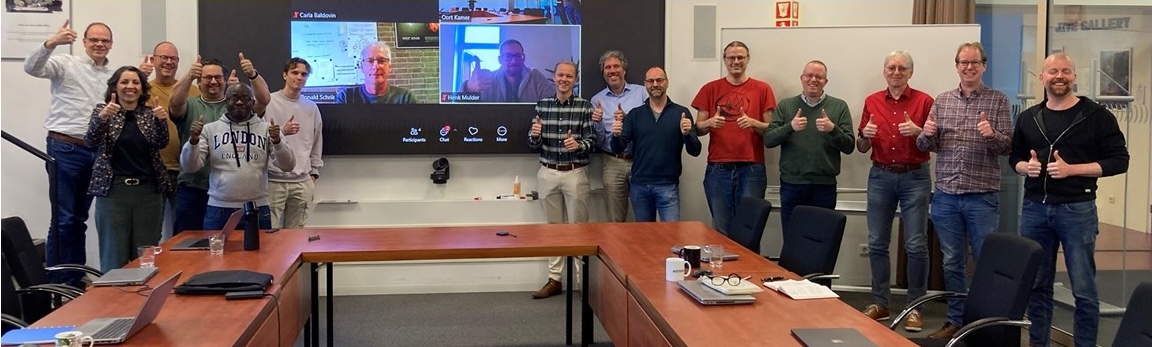
The pictures show the great progress done in AIV over the last couple of months.
Figure 2 shows the International Rollout Readiness Review on March 18. The goal was to determine if the project is ready to start the upgrade of SE607, the first international station, in April.
Participants included AIV team, team Ruby, ICT, Commissioning, head of Telescope Operations, and PM for the construction of LOFAR stations in Italy and Bulgaria.
The rollout process for international stations is as follows:
- Rollout readiness review
- Pilot#1: upgrade first station SE607
- Pilot#1 review
- Pilot#2: upgrade second station PL612
- Pilot#2 review
- Continue with remaining the stations
The outcome of the review was positive; the teams continued the preparations to upgrade the first station with clear actions.
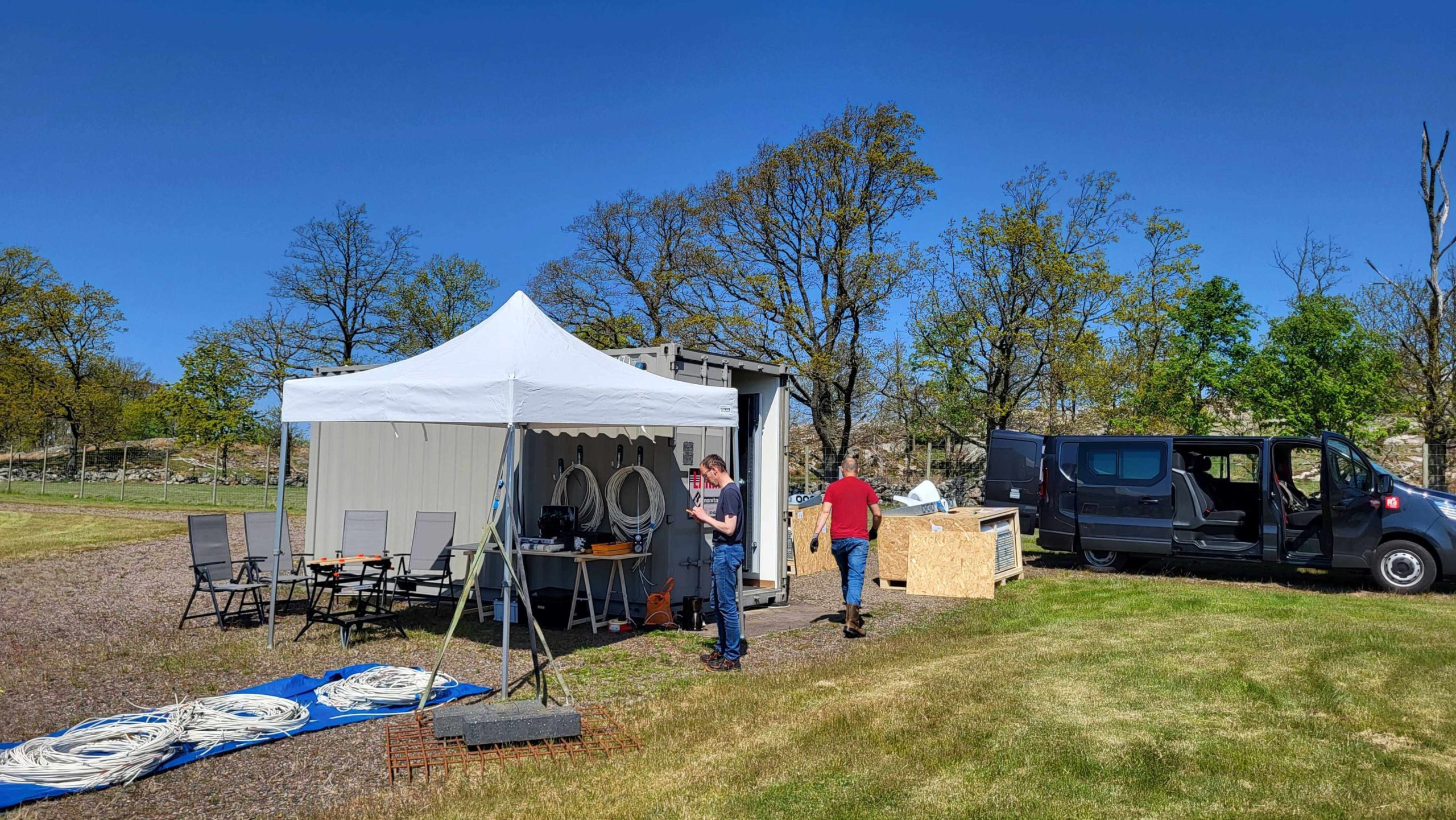
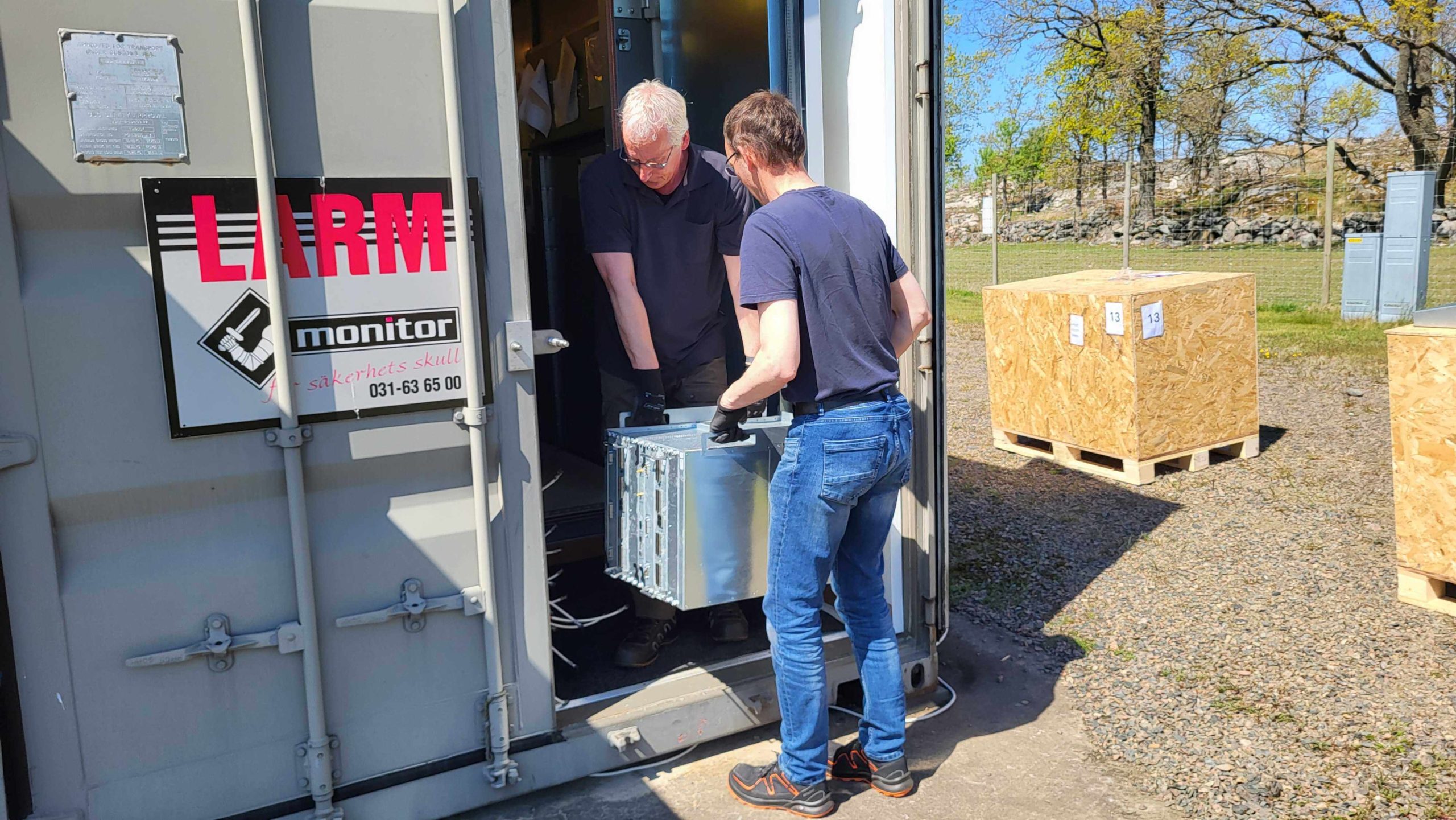
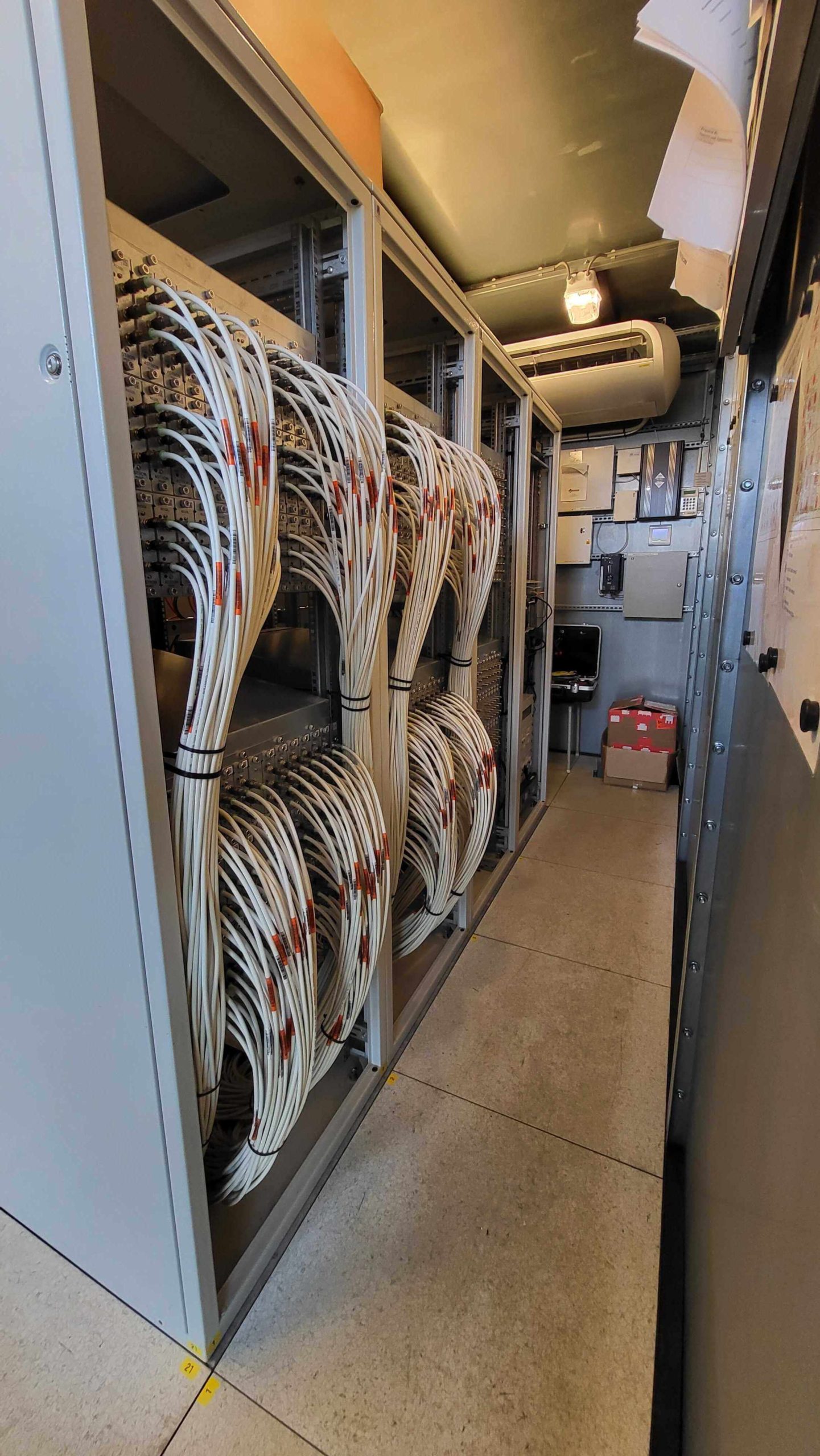
The upgrade of SE607 started on week 17 with the dismantling of the LOFAR1 equipment by the Onsala team. On week 18, a first team from ASTRON travelled to Sweden to install the station switches. On week 21, a second team from ASTRON visited SE607 to perform the integration and testing of LOFAR2.0. Pictures 2,3,4 show impressions of that week. By the end of the week, the integration was completed, and the Verification team could complete most of the tests. It's important to note that the constant support from Dwingeloo of our colleagues from ICT, team Ruby, Operators, and Verification team was key to the success of the week.
After the upgrade of SE607, we held the post-rollout review with all teams involved. We identified points for improvement to make the process smoother for the next stations. Overall, the conclusion was that the rollout was a success thanks to the coordination and collaboration between the teams, including our colleagues in Onsala. This means we are ready to continue with the second station: PL612.
The team from Olsztyn dismantled the LOFAR1 equipment in week 23 and the rollout team from ASTRON will be working on the integration of LOFAR2.0 in week 25, with the help from local staff.
In August and September, we will move on with the upgrade of PL610, PL611, DE605, and DE609.
LOFAR2.0 Commissioning - M. Brentjens and Commissioning team
The past quarter the commissioning team has focused on a couple fundamentals: operational reliability, sensitivity, and synchronisation. With the still rapid pace of development and deployment of new instrument components and features, actual commissioning observing time was severely limited. The first two months of the year therefore had the aim of making the act of observing more stable. A large part of that consisted of ICT and software teams solving a plethora of relatively small issues and inconveniences, that in combination led to a rather high observing failure rate. At this moment, new software- or operating system deployments typically only lead to downtime on the day of the upgrade and sometimes the day after.
With the system now stable, development of tooling to determine System Equivalent Flux Densities (SEFDs, a measure of system noise) led to interesting and highly informative data on which stations provide the noisiest data. Combining that with information from the standard station-test and the Grafana system monitoring displays, will hopefully lead to a priority list for maintenance, as well as quantitative information on the adequate number of spares required for many components.
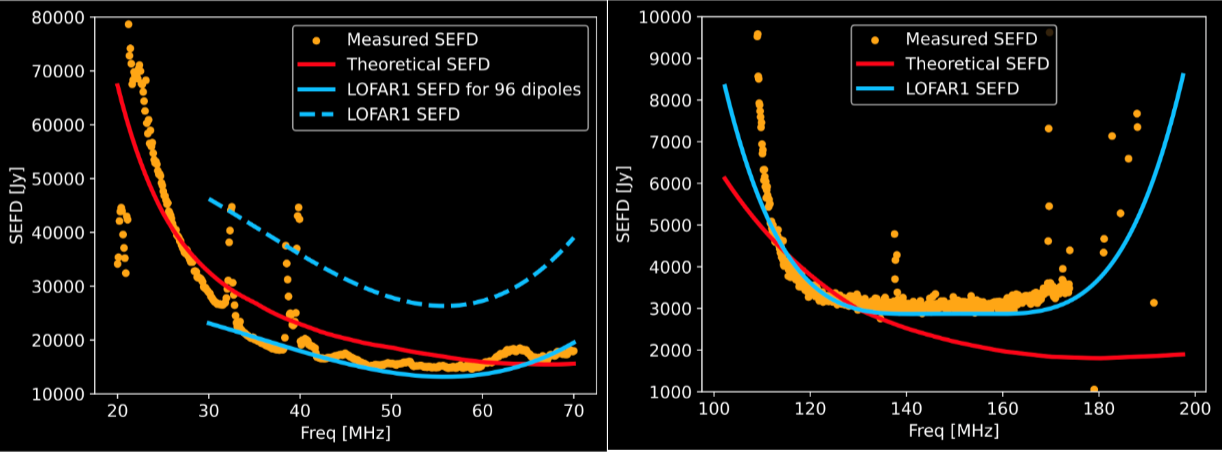
Simultaneously, tied array calibration for LBA and HBA for the currently available NL array (including remote stations) became much more mature. By the end of April, the residual relative clock time offsets between stations were typically below 0.5 nanoseconds, with many below 0.2 nanoseconds. Residual phases seem to be of the order of a few tens of degrees!
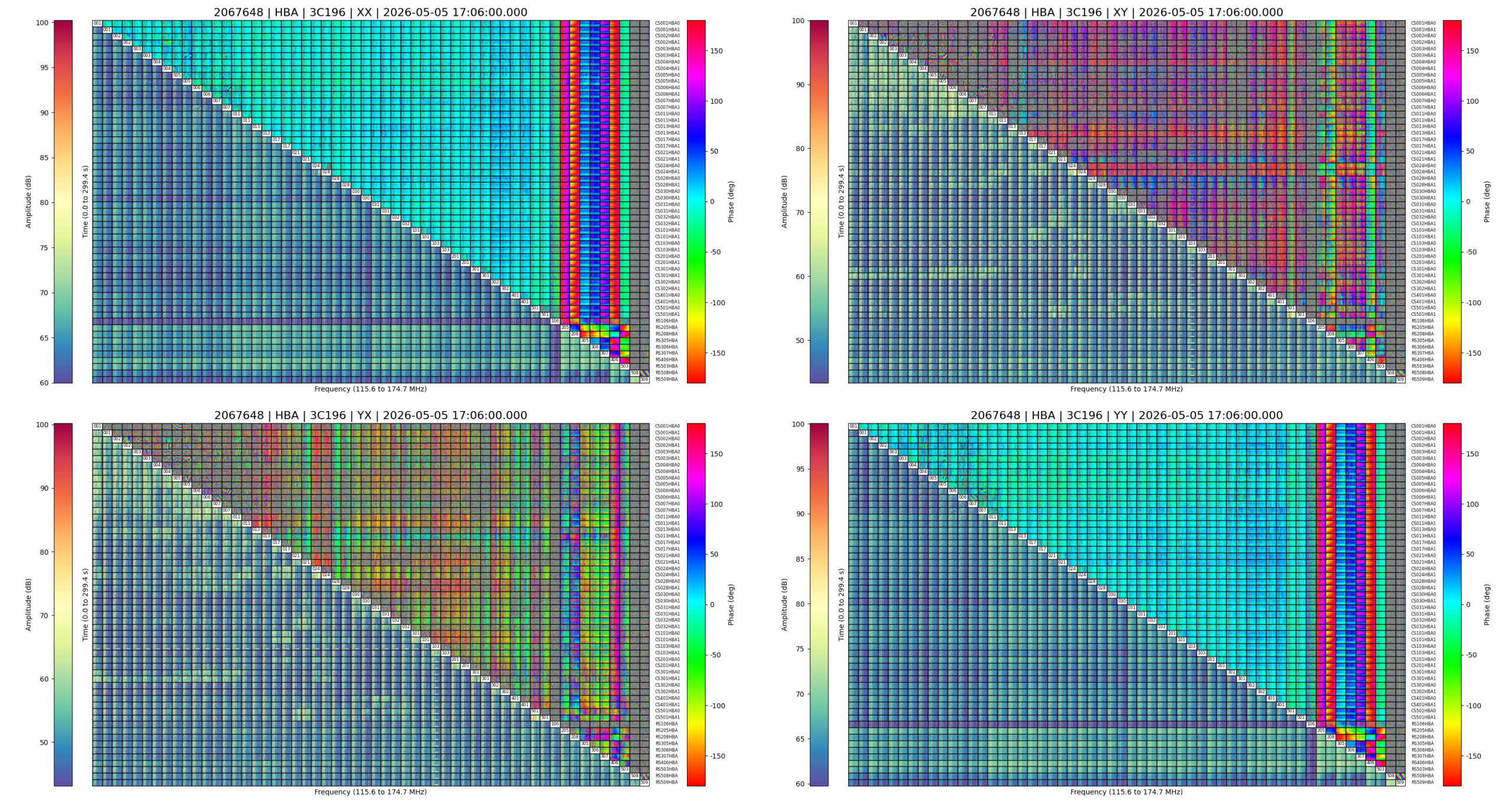
We are not yet running for a long time with these coefficients, but even before calibration, it looks like delays remain at their calibrated values to well within a nanosecond on timescales of weeks to months. At the time of writing, the correlator is being upgraded to an initial version of the Cobalt3 software. We expect this sets us up nicely for full correlator and beamformer performance somewhere this fall, but we will report on this later.
This has been a very productive quarter for the whole LOFAR2.0 delivery teams. The commissioning team looks forward to creating the first 6-arcsecond resolution images in the coming months, perhaps even with the first upgraded international station!